You don't need a fashion degree to start a clothing brand
What the industry gatekeepers won't admit - and the 7 things that actually matter when you're starting from scratch.
Let me save you about three years of wondering.
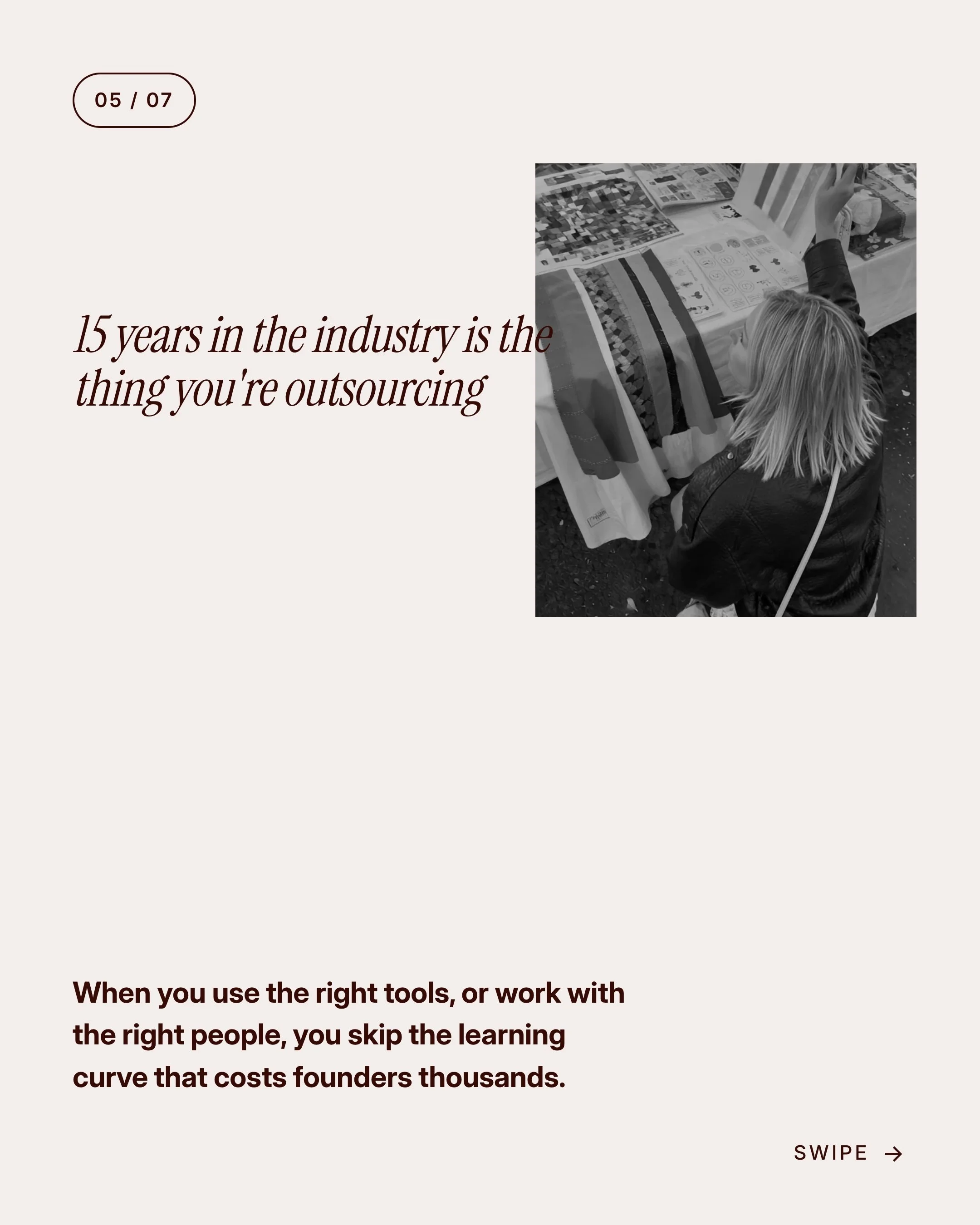
I have a fashion degree. I spent 15 years as a senior designer working with labels stocked by Revolve, Nasty Gal, Planet Blue, Myer, and The Iconic. And I can tell you — with complete certainty — that a degree is not what made any of that happen.
The most capable founders I've worked with didn't have one. Some of the most lost people I've met in this industry had a first-class honours degree and no idea how a garment actually gets made.
The degree teaches you theory. The industry teaches you everything else.
"The most capable founders I've worked with didn't have a fashion degree. Some of the most confused people I've met had a first-class honours."
So if you're sitting on a brand idea — and that little voice keeps whispering "but who am I to do this?" — this one's for you.
So what do you actually need?
Here are the 7 things that genuinely matter when you're starting a clothing brand from scratch. None of them require a qualification.
1. A clear idea of who you're designing for
Not "women aged 25-40." An actual person. What does she buy on a Tuesday? What does she hate about getting dressed? What does she want to feel when she walks into a room? The brands that connect know exactly who they're talking to. Everything else follows from that.
2. A basic understanding of how garments get made
You don't need to know how to sew. You need to understand how a garment is constructed well enough to brief a factory. That means knowing what a tech pack is, what your construction details need to cover, and how to describe what you want without ambiguity. This is learnable. It's not gatekept behind four years of study.
3. A supplier you can trust
Finding a reliable manufacturer is where most first-time founders lose months — and thousands of dollars. The skill isn't in knowing every factory. It's in knowing what questions to ask, what red flags to spot, and how to vet a supplier before you wire any money. That's process knowledge, not degree knowledge.
4. Factory-ready documentation
Factories deal with hundreds of brands. Your job is to be easy to work with. That means tech packs that are complete, spec sheets that are clear, and communication that's professional. When your documents look the part, factories take you seriously — regardless of how long you've been doing this.
5. A realistic budget (and a plan for it)
One of the most expensive things a first-time founder can do is go in without understanding their real costs. Sampling, bulk production, labelling, shipping, duties, photography — it adds up fast. The founders who avoid the $5K mistakes are the ones who map their numbers before they sample, not after.
6. Patience for the sampling process
Your first sample will not be right. That's not failure — that's the process. Understanding what to look for, how to give feedback, and how many rounds are normal (versus a sign something is wrong) is knowledge that saves you time and money every single time.
7. The right tools in your corner
You don't need a degree. But you do need access to the right information — the stuff that industry insiders take for granted and first-timers spend years piecing together through expensive trial and error. That's exactly why FashionFanBase exists.
"The brands that last aren't built by the people with the most credentials. They're built by the people who kept going."
What a degree actually gives you
In the interest of being fair — a fashion degree does give you some things. A network. Studio access. A structured way to practice construction. Pattern-making fundamentals.
But most of that is available other ways. And none of it is what makes a brand commercially successful.
What makes a brand work is knowing your customer, communicating clearly with your factory, protecting your margins, and building product that people actually want to buy. None of that requires a piece of paper.
From your Claude Design batch
The honest truth
The brands that last aren't built by the people with the most credentials. They're built by the people who kept going - through the bad samples, the difficult factories, the tight margins, and the moments where it all felt impossible.
You don't need permission from a university to start. You need the right knowledge, the right tools, and enough conviction to move.
If you're already moving - even slowly, even messily - you're ahead of where you think you are.